


We All Need Reconciliation, Or Do We?


Not everyone realizes they need reconciliation.
In fact, we often say that every single person needs what a reconciliation ministry has to offer—but most people don’t recognize that need, for a wide variety of reasons.
Some people feel an ache they can’t quite name. Others know something is broken but feel unsure—or afraid—of how to move forward. Still others are ready for biblical clarity and wise guidance, but don’t want shallow answers or forced peace.
As a reconciliation ministry, we believe it matters deeply that we speak to all of these people—not just those already convinced. That conviction is shaping a new three‑video series, which we will be rolling out on a scheduled release over the next couple of weeks, each video intentionally crafted for a different place on what is often called the awareness ladder: problem‑unaware, problem‑aware, and solution‑aware.
Together, these videos reflect how people actually experience conflict—and how Scripture patiently meets them where they are.
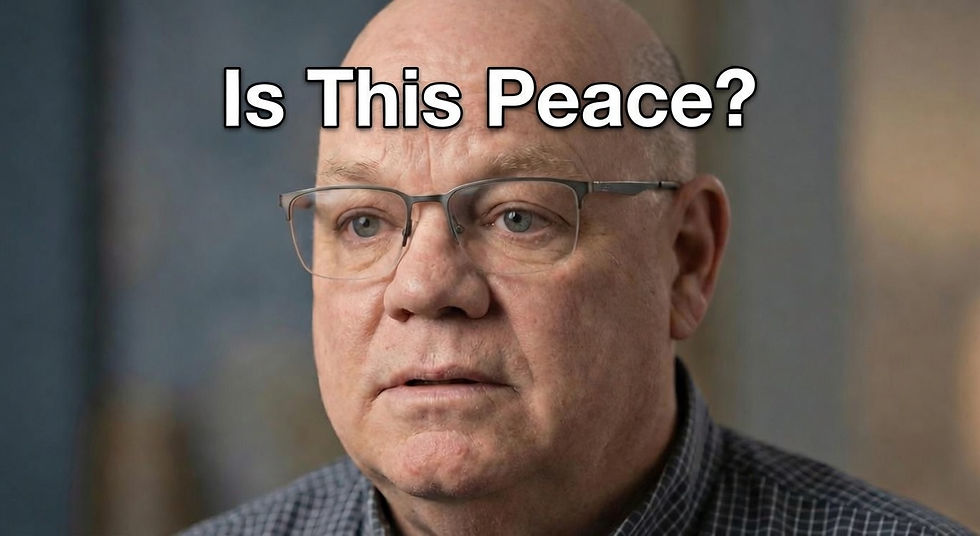
1. When People Don’t Yet Know There’s a Problem
The first video is for those who would never describe themselves as “in conflict.”
Everything appears calm. Relationships are civil. There are no raised voices, no dramatic fallout. And yet there is distance—unspoken, quiet, and unresolved. Many people live in this space without realizing that Scripture has a word for it.
For many Christians, this kind of distance has been normalized. They attend church regularly. They serve. They sing. They pray. And all around them—sometimes even within their own families or congregations—there are relationships marked by avoidance, strained politeness, or emotional withdrawal. Because nothing explosive happened, the conflict goes unnamed. Because everyone is being “nice,” it feels unspiritual to question it.
Over time, silence begins to feel like maturity. Distance begins to feel like wisdom. And unresolved tension is quietly accepted as just “how relationships are.”
But the Bible consistently distinguishes between surface calm and true wholeness. Scripture does not describe peace as mere absence of tension, but as something deeper and fuller:
“And let the peace of Christ rule in your hearts.” (Colossians 3:15)
Biblical peace is not passive. It rules. It governs the heart. It does not simply avoid disruption; it restores what has been fractured.
This video gently raises a question many church‑going Christians have never stopped to ask: What if the peace I’ve accepted isn’t the peace Christ is offering? What if silence, avoidance, or polite distance are not signs of spiritual maturity—but signs that something good has been left unfinished?
For a reconciliation ministry, this audience matters because awareness is often the first act of grace. You cannot heal what you do not yet recognize as wounded. And many believers have learned to live with brokenness they no longer know how to see.
A common misstep reconcilers often see: offering biblical commands or confrontation before awareness exists. When Matthew 18 language is introduced too early, it can feel confusing or accusatory rather than clarifying—because the person has not yet named the problem.

2. When People Know Something Is Broken - We All Need Reconciliation - but Feel Afraid to Act
The second video speaks to believers who already feel the tension.
They know something is wrong. A relationship is strained. A conversation has been avoided. A wound has never quite healed. And unlike the first group, they do feel the weight of it.
They also know Scripture calls them toward reconciliation. They know Jesus’ words in Matthew 5 and Matthew 18. And yet those passages often stir fear rather than confidence:
“First be reconciled to your brother, and then come and offer your gift.” (Matthew 5:24)
“If your brother sins against you, go and tell him his fault.” (Matthew 18:15)
What many Christians don’t realize is that these are not isolated commands. Scripture repeatedly calls God’s people to actively pursue peace with one another:
“If possible, so far as it depends on you, live peaceably with all.” (Romans 12:18)
“Strive for peace with everyone.” (Hebrews 12:14)
“Be kind to one another, tenderhearted, forgiving one another, as God in Christ forgave you.” (Ephesians 4:32)
Despite this, most Christians have received very little formation in how to live this way. They know the commands—but not the pathway. They want to obey Jesus, but fear doing so poorly.
Many aren’t resisting obedience—they’re afraid of making things worse. They wonder if speaking will reopen wounds, escalate tension, or reveal something they are not prepared to handle. And so they wait. They pray. They hope time will soften what courage might heal.
This video addresses the quiet gap between knowing what Jesus commands and knowing how to obey Him wisely. It explains why reconciliation is holy work—and why holy work often requires guidance. A reconciliation ministry does not replace obedience; it helps believers walk into obedience with humility, clarity, and care.
This audience matters because many conflicts persist not from rebellion, but from uncertainty. Fear, not defiance, keeps people stuck—and leaves the call to peace unfulfilled.
A common misstep reconcilers often see: treating fear as rebellion. Urgency without support—“you just need to be obedient”—often deepens paralysis instead of producing faithful action.

3. When People Are Ready for Biblical Clarity and a Way Forward
The third video is for those asking a more focused question: What does biblical reconciliation actually look like?
Not a slogan. Not a single conversation. Not pressure to “just forgive and move on.” But the shape reconciliation takes when it is rooted in Scripture and centered on the Cross.
The Bible frames reconciliation as something God Himself initiates and sustains:
“All this is from God, who through Christ reconciled us to himself.” (2 Corinthians 5:18)
This video emphasizes a central truth: biblical reconciliation is a process, not a moment. It is shepherded, not improvised. And it must be grounded in the Cross, because reconciliation without the Cross either minimizes sin or overwhelms the sinner.
At the Cross, truth can be spoken honestly and mercy received fully:
“Mercy triumphs over judgment.” (James 2:13)
For a reconciliation ministry, this audience matters because clarity sustains courage. When believers understand the shape of reconciliation—confession, repentance, forgiveness, and restored trust over time—they are far more willing to walk it faithfully.
A common misstep reconcilers often see: assuming readiness for clarity means readiness for speed. Even those eager for biblical guidance can be harmed when reconciliation is reduced to a formula or rushed toward outcomes.
Why This Matters for Our Ministry
God does not speak to everyone as if they are in the same place. Throughout Scripture, He awakens awareness, invites honesty, and then provides wisdom for the journey forward.
That same movement shapes this three‑video series. Released intentionally over the coming weeks, these videos are not just content—they are pathways:
A doorway for those who haven’t yet named the problem
A bridge for those who feel the tension but lack direction
A guide for those ready to pursue reconciliation biblically and wisely
Together, they reflect our conviction that reconciliation ministry must be patient, pastoral, and grounded in the gospel of Jesus Christ.
For Reconcilers in the Field
This framework is not only about communication strategy—it is a listening posture. Before offering counsel, correction, or clarity, reconcilers can prayerfully ask:
Does this person recognize there is a problem?
Do they feel the weight of it but fear acting?
Or are they asking for biblical structure and guidance?
The answer often determines whether clarity will heal—or overwhelm. Discernment is not delay; it is love applied with timing.
Biblical reconciliation requires more than courage. It requires discernment—knowing not only what Scripture says, but when and how to bring its wisdom to bear in a way that serves obedience rather than burdens it.
A Simple Diagnostic for Discernment
Reconcilers may find it helpful to listen for these kinds of questions in early conversations:
“How would you describe the relationship right now—calm, tense, or broken?”
“What feels hardest about addressing this?”
“What are you hoping reconciliation would look like?”
The answers often reveal where someone is on the awareness ladder—and which kind of guidance will serve them best.
We’d Love Your Input as We Move Forward
As we continue releasing these videos and developing future resources, we want to steward this ministry thoughtfully and faithfully.
We invite your feedback:
Which of these videos feels most needed in your context right now?
How might they be used—in churches, counseling settings, small groups, classrooms, or personal conversations?
Are there gaps you notice? Audiences we should be addressing more clearly?
Your insight helps us serve well—not just by producing resources, but by walking with people at every stage of the journey toward Christ‑centered reconciliation.
Because reconciliation doesn’t begin in the same place for everyone—but it always leads us back to the same Savior.
As reconcilers, we have the privilege of walking patiently with people—naming what is unseen, steadying what is afraid, and guiding what is ready—until the peace of Christ truly rules the heart.



Comments